Best Deck Railing Ideas for Canadian Homes (2026 Guide)
A beautiful outdoor deck can completely transform the appearance and functionality of a home. Whether you have a small backyard deck, a spacious elevated patio, or a modern balcony, choosing the right railing system plays an important role in creating a safe and attractive outdoor space.
Across Canada, homeowners are increasingly choosing modern railing systems that combine contemporary design, durability, and low maintenance. From sleek black aluminum railings to frameless glass systems, today’s options offer more flexibility than traditional wooden railings.
The right railing does more than improve the appearance of your deck. It provides a protective barrier, complements your home’s architecture, and helps create a comfortable outdoor living environment.
If you’re exploring deck railing ideas Canada homeowners are choosing in 2026, this guide covers popular designs, material comparisons, maintenance considerations, and practical tips to help you select the right railing for your property.
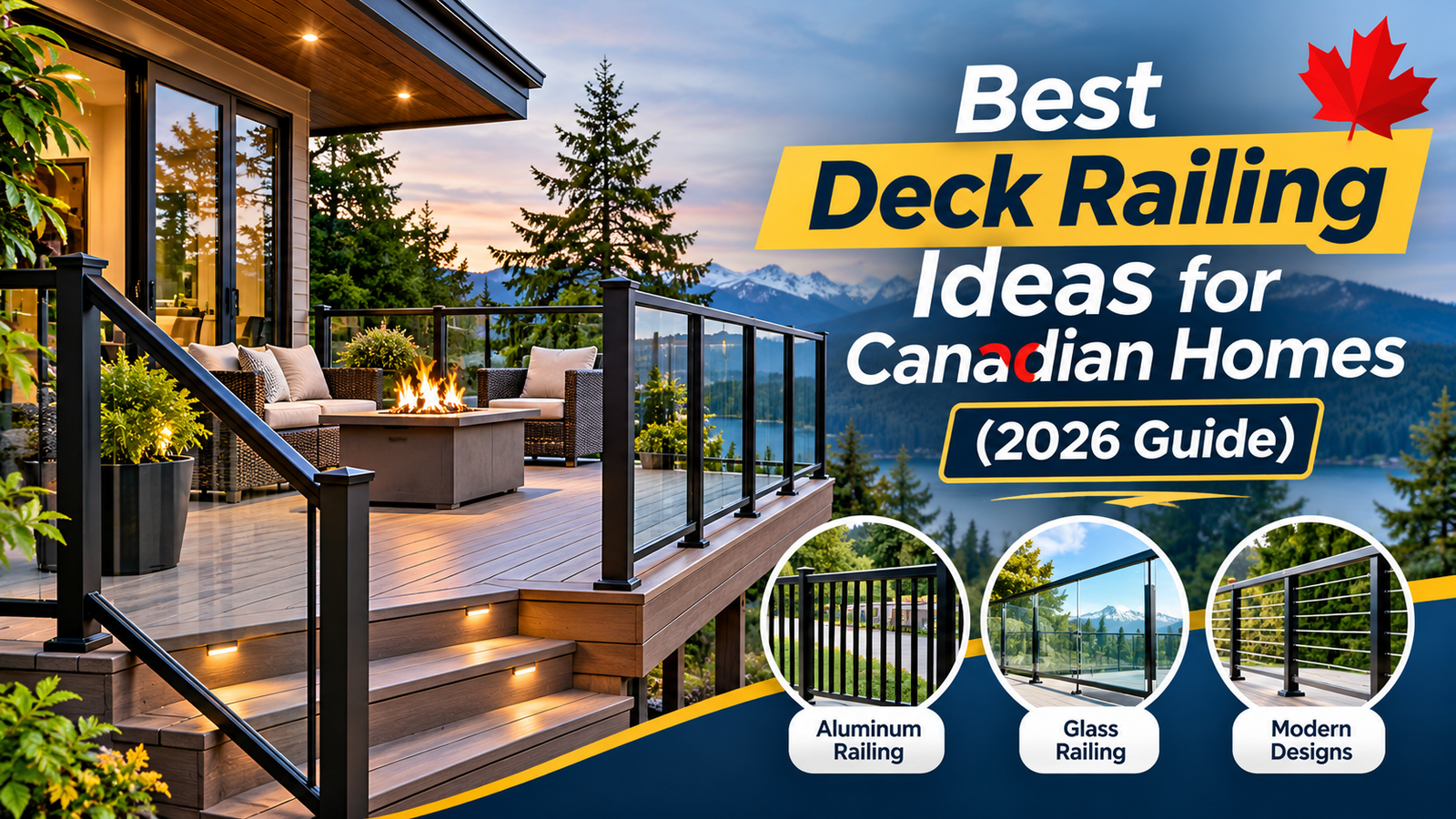
Why Choosing the Right Deck Railing Matters
Deck railings are an essential part of outdoor home design. They provide safety around elevated decks while contributing to the overall architectural appearance of a property.
A well-designed railing system can:
- Improve deck safety and usability.
- Enhance exterior aesthetics.
- Complement modern home architecture.
- Provide unobstructed outdoor views.
- Reduce long-term maintenance.
- Create a more polished outdoor living space.
For Canadian homeowners, material selection is particularly important. Rain, snow, moisture, and seasonal temperature changes can affect outdoor structures over time.
Choosing suitable materials and professional installation can help ensure your railing performs well in local weather conditions.
10 Best Deck Railing Ideas for Canadian Homes
1. Modern Aluminum Deck Railings
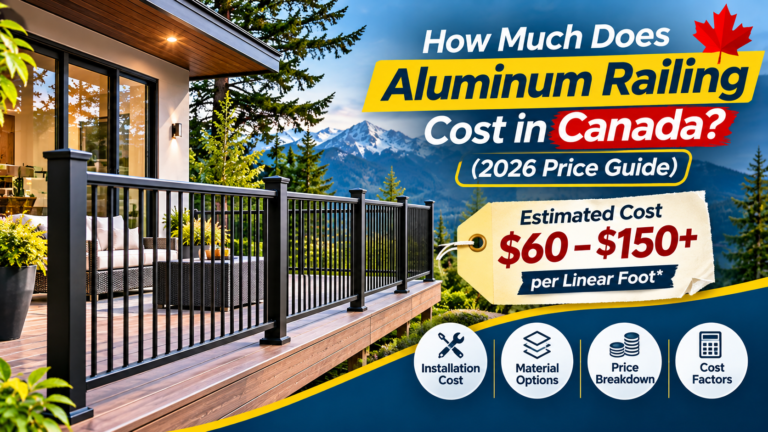
Aluminum railings are among the most practical choices for modern residential decks. Their clean appearance, corrosion resistance, and relatively low maintenance requirements make them popular for outdoor applications.
Modern aluminum railing systems are available in different colours, finishes, and configurations.
Why homeowners choose aluminum railings:
- Resistant to rust and corrosion.
- Require relatively little maintenance.
- Available in contemporary designs.
- Suitable for decks, balconies, and stairs.
- Complement modern and traditional homes.
Black aluminum railings are particularly popular because they create a clean contrast against light-coloured siding, wooden decking, and modern exterior finishes.
For homeowners researching aluminum deck railing Canada options, powder-coated aluminum systems are worth considering because they combine an attractive finish with outdoor durability.
2. Frameless Glass Deck Railings
If preserving outdoor views is your priority, frameless glass railings are an excellent design option.
These systems use glass panels with minimal visible framing to create an open and sophisticated appearance.
They are particularly suitable for:
- Scenic residential properties.
- Modern backyard decks.
- Elevated patios.
- Waterfront homes.
- Contemporary architectural designs.
Glass railings allow natural light to pass through while providing a protective barrier when properly designed and installed.
However, homeowners should consider glass cleaning requirements, hardware quality, panel specifications, and installation costs before choosing this option.
3. Black Aluminum Railing Designs
Black aluminum railings continue to be a popular choice for contemporary outdoor spaces.
Their neutral appearance makes them easy to coordinate with different decking materials and architectural styles.
Popular combinations include:
- Black aluminum with composite decking.
- Black aluminum with natural wood.
- Black aluminum with stone patios.
- Black aluminum with modern white exteriors.
These modern deck railing designs provide a simple way to upgrade an older outdoor space without introducing overly decorative elements.
They are especially attractive for homeowners who prefer minimalist exterior design.
4. Horizontal Aluminum Railing Systems
Horizontal railing designs feature evenly spaced horizontal bars that create a streamlined architectural appearance.
They work particularly well with contemporary homes and modern deck layouts.
Benefits include:
- Clean geometric appearance.
- Customizable configurations.
- Modern architectural styling.
- Multiple finish options.
Before choosing a horizontal railing, homeowners should verify applicable building-code requirements, including opening limitations and climbability considerations.
5. Traditional Vertical Picket Railings
Traditional vertical picket railings remain a practical and versatile option.
Their simple structure complements a wide range of residential properties, including traditional family homes and contemporary buildings.
Advantages include:
- Classic appearance.
- Clear visual boundaries.
- Multiple colour options.
- Compatibility with aluminum systems.
- Relatively straightforward maintenance.
Vertical picket railings can be customized with different spacing, post styles, and top rail finishes.
6. Glass and Aluminum Combination Railings
Combining glass panels with aluminum posts and framing creates a balance between modern aesthetics and structural support.
This design is popular among homeowners who want an open appearance without selecting a completely frameless system.
Common features include:
- Aluminum posts.
- Tempered safety glass.
- Modern top rails.
- Powder-coated finishes.
- Custom panel configurations.
These contemporary deck railings work well for residential decks, balconies, and outdoor entertainment areas.
7. Cable Railing Systems
Cable railing systems use horizontal stainless-steel cables supported by posts and structural frames.
They are designed to provide a relatively open appearance while maintaining a defined railing boundary.
Cable systems are commonly considered for:
- Modern residential decks.
- Contemporary patios.
- Elevated outdoor spaces.
- Properties with scenic surroundings.
However, cable spacing, tension, structural requirements, and local building regulations should be carefully considered during installation.
8. Privacy-Focused Deck Railing Designs
Homeowners with closely positioned neighbouring properties often prioritize outdoor privacy.
Privacy-oriented railing systems can help create a more comfortable outdoor environment.
Popular options include:
- Decorative aluminum panels.
- Privacy screens.
- Partially enclosed railing sections.
- Custom-designed metal panels.
These systems can be incorporated into modern deck layouts without making the entire outdoor space feel enclosed.
For better results, consider combining privacy panels with appropriate landscaping and outdoor seating arrangements.
9. Minimalist Contemporary Railing Designs
Minimalist railing systems focus on simplicity, clean lines, and functionality.
Instead of decorative patterns, these designs use straightforward shapes and subtle finishes.
Popular minimalist options include:
- Slim aluminum posts.
- Simple vertical pickets.
- Frameless glass panels.
- Neutral colour palettes.
- Clean top rail profiles.
Minimalist outdoor railing ideas are particularly suitable for homeowners who want their deck railing to complement rather than dominate the exterior design.
10. Custom Decorative Railing Systems
Custom railings allow homeowners to create designs that match their property’s architectural style.
Options may include decorative metal patterns, customized post arrangements, mixed materials, and unique finishes.
Custom systems are particularly useful when a standard railing configuration does not suit the dimensions or appearance of a property.
Before choosing a custom design, discuss material specifications, structural requirements, installation details, and maintenance expectations with your contractor.
Best Deck Railing Materials for Canadian Weather
Canada experiences different weather conditions depending on the region. Coastal British Columbia, for example, has different moisture and temperature patterns compared with colder inland areas.
Selecting the right material helps reduce maintenance and improve long-term performance.
| Material | Main Benefits | Considerations |
|---|---|---|
| Aluminum | Corrosion-resistant, lightweight, low maintenance | Finish and hardware quality matter |
| Glass | Open views, modern appearance | Requires regular cleaning |
| Wood | Natural appearance, customizable | Needs periodic sealing or staining |
| Stainless steel | Modern appearance, strength | Grade and corrosion resistance matter |
| Cable | Open design, minimal visual obstruction | Requires proper tension and maintenance |
For many homeowners, aluminum and glass offer an attractive combination of contemporary design and practical outdoor performance.
Aluminum vs Glass vs Wood Deck Railings: Which Is Better?
Choosing between aluminum, glass, and wood depends on your budget, design preferences, maintenance expectations, and property requirements.
Aluminum Railings
Best for homeowners who want a durable, low-maintenance railing system with multiple design options.
Glass Railings
Best for properties where maintaining outdoor views and creating an open appearance are important.
Wood Railings
Best for homeowners who prefer natural materials and traditional exterior designs and are comfortable with regular maintenance.
There is no single best material for every property. The right choice depends on how you use your deck and what you expect from your railing system over time.
How to Choose the Right Deck Railing for Your Home
Before investing in a new railing system, consider the following factors.
1. Understand Your Deck Layout
The height, shape, and configuration of your deck influence which railing systems are suitable.
A large elevated deck may have different structural requirements from a small ground-level outdoor platform.
2. Consider Your Home’s Architecture
Choose a railing design that complements your property’s exterior.
For example, black aluminum works well with contemporary architecture, while glass systems can suit homes where maintaining scenic views is important.
3. Evaluate Maintenance Requirements
Think about how much time you want to spend maintaining your outdoor railing.
Aluminum generally requires less maintenance than traditional wood, while glass needs periodic cleaning to maintain its appearance.
4. Check Building Code Requirements
Deck railing requirements vary by jurisdiction and depend on factors such as deck height, building type, and project specifications.
Before installation, confirm applicable local requirements, including railing height, openings, structural loading, and attachment details.
5. Work With an Experienced Contractor
Professional installation helps ensure proper measurements, secure connections, suitable materials, and a finished appearance.
Ask contractors about previous projects, material specifications, warranties, and installation procedures before making a decision.
Deck Railing Maintenance Tips
Even durable railing systems benefit from regular inspection and basic maintenance.
Here are some practical recommendations:
- Clean aluminum railings periodically using suitable cleaning products.
- Inspect fasteners and mounting connections.
- Check glass panels for visible damage.
- Keep drainage areas clear.
- Inspect painted or powder-coated finishes.
- Address loose components promptly.
- Follow manufacturer maintenance instructions.
Regular inspections can help identify minor issues before they become more significant problems.
Deck Railing Safety and Canadian Building Codes
Safety should always be a priority when planning a deck railing installation.
Canadian building requirements are governed by applicable provincial and local regulations, which may reference the National Building Code of Canada with regional amendments.
Important considerations include:
- Required guard height.
- Opening and spacing limitations.
- Structural loading.
- Handrail requirements for stairs.
- Proper anchoring and connections.
- Appropriate materials and installation methods.
Requirements can differ between residential and commercial properties. In British Columbia, homeowners should check the current BC Building Code and applicable municipal requirements before starting a project.
A qualified contractor can help identify the relevant requirements for your specific installation.
Why Professional Deck Railing Installation Matters
A well-designed railing system requires more than attractive materials. Proper measurements, suitable mounting hardware, structural support, and accurate installation are essential.
Professional installation helps with:
- Selecting suitable railing configurations.
- Accurate site measurements.
- Secure post and panel installation.
- Appropriate material selection.
- Compliance with applicable building requirements.
- Consistent finishing and alignment.
Hi-Tech Railing & Awning Ltd provides railing solutions for residential and commercial properties, including aluminum and glass railing systems.
Homeowners in Surrey BC and surrounding communities can explore custom railing options designed to complement their outdoor spaces.
Final Thoughts
The best deck railing ideas Canada homeowners can consider in 2026 combine modern design, safety, durability, and manageable maintenance.
From black aluminum railing systems and frameless glass panels to horizontal designs and custom decorative solutions, there are plenty of ways to improve the appearance and functionality of an outdoor deck.
Before choosing a design, consider your property’s architecture, local weather conditions, maintenance expectations, and applicable building requirements.
If you’re planning a deck renovation or a new outdoor railing installation, Hi-Tech Railing & Awning Ltd can help you explore modern aluminum and glass railing solutions for your property.
Contact the team to discuss your project and find a railing design that complements your home.
Frequently Asked Questions
1. What is the best deck railing material for Canadian homes?
Aluminum and glass are popular choices because they offer modern aesthetics and practical outdoor performance. Aluminum is particularly attractive for homeowners seeking low-maintenance solutions, while glass is ideal for preserving views.
2. Are aluminum deck railings suitable for Canadian weather?
Yes. Aluminum naturally resists corrosion, and properly finished railing systems can perform well in many Canadian outdoor environments. Regular inspection and appropriate installation remain important.
3. Are glass deck railings better than aluminum railings?
Neither is universally better. Glass offers unobstructed views and a modern appearance, while aluminum generally offers easier maintenance and a wider range of privacy-focused configurations.
4. How do I choose a modern deck railing design?
Consider your home’s architecture, deck layout, budget, maintenance preferences, and local building requirements. Popular choices include black aluminum, glass panels, and minimalist vertical picket systems.
5. Do deck railings need to meet Canadian building codes?
Yes. Applicable building codes establish requirements for guard heights, openings, structural strength, and other safety features. Requirements vary by jurisdiction and project type, so confirm local regulations before installation.